
The challenge
When campaigns run across several platforms, performance is easy to misread. A low cost per click can hide weak enquiries. A high reach number does not show which people were ready to act.
The objective of the review is simple: understand the purpose of each campaign, check the quality of traffic and see whether customer actions support further investment.
The approach
- Separate awareness, traffic and lead objectives.
- Review creative and audience combinations rather than totals alone.
- Check clicks, landing-page behaviour and reported conversions in context.
- Compare periods using the same definitions and reporting settings.
- Explain what remains uncertain before making the next decision.
What the screenshots show
These are selected platform reporting views supplied with the portfolio. They are not independent audits, and the original campaign scope, attribution settings and period must be confirmed before making a specific ROI claim.
Meta Ads historical reporting view

Screenshot supplied by the founder. Individual campaign figures should be read alongside dates and attribution definitions.
Google Ads historical reporting view
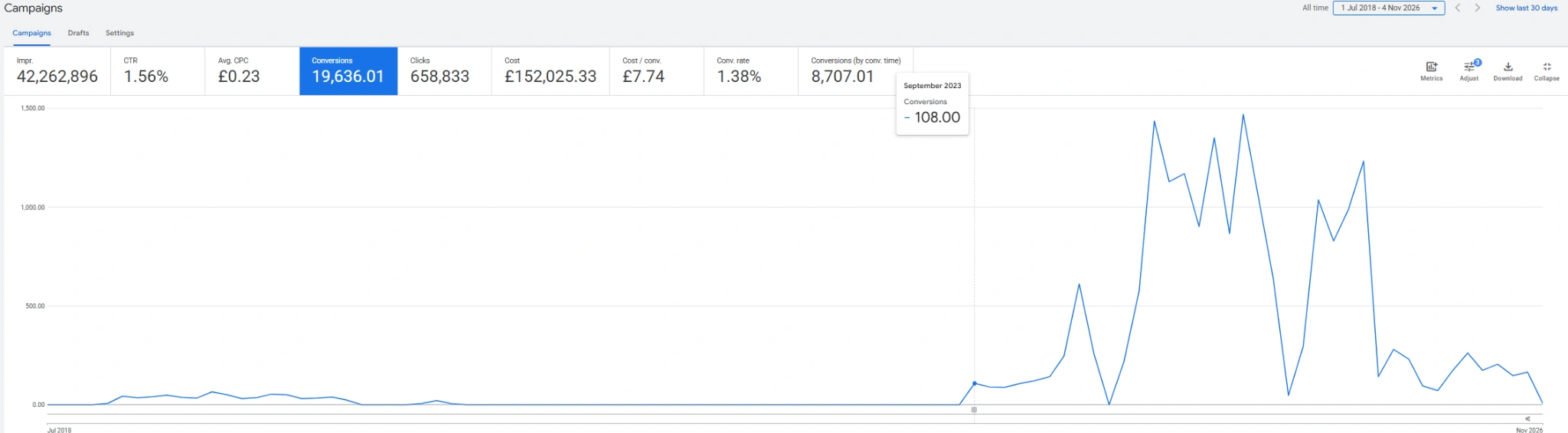
Platform reporting evidence. No sales or revenue guarantee is inferred from these charts.
What this work teaches
Better decisions usually come from asking more specific questions. Which search term showed intent? Which creative earned a useful click? Did the landing page make the offer clear? What changed after the campaign launched?
These questions shape how ARAT plans and reviews work for businesses in Nepal too.